
Engineers and individual contributors
Understand your own load, flow, and decision readiness before you hit the wall.
Explore AI Engineering Teams ->
Sustainable performance for AI-accelerated teams
AI increases output, context switching, and verification burden. Ascenda helps organisations detect hidden cognitive strain early and act before it becomes burnout, attrition, or psychosocial risk.
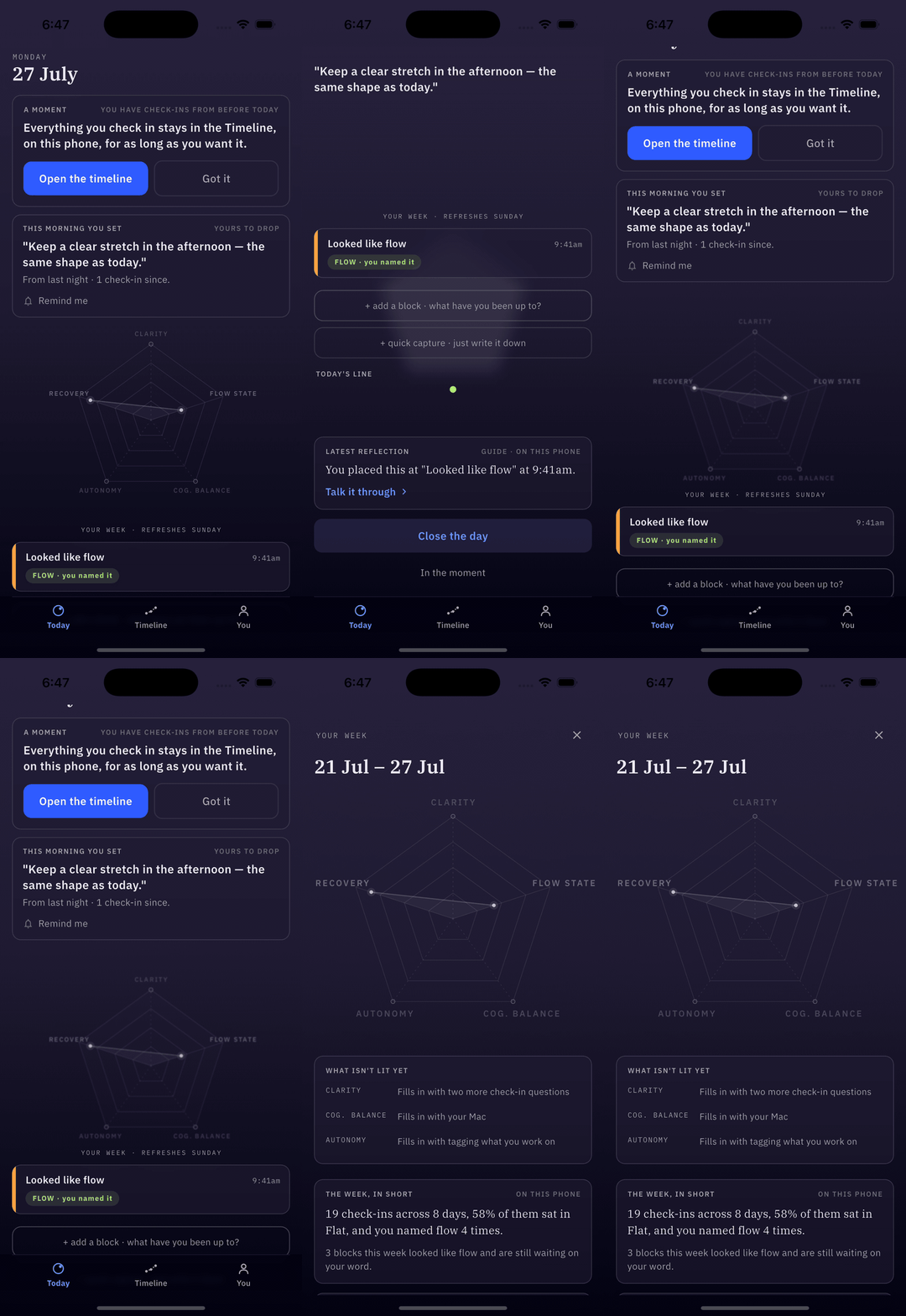
The context
Ascenda helps organisations see whether pace is sustainable, not just whether delivery volume is rising.
AI can reduce some manual effort while increasing review load, trust decisions, and context switching across critical roles.
Teams can ship faster while flow quality drops and cognitive load rises. Traditional delivery dashboards do not reveal that gap.
An engineer, lawyer, nurse, and founder face different decision environments. One-size support misses the real strain patterns.
Organisations need de-identified trend signals to intervene early, while individuals keep control over personal support experiences.
Where Ascenda fits
| Layer | Approach | Gap |
|---|---|---|
| Delivery dashboards | Output-focused | Misses cognitive sustainability |
| Periodic surveys | Snapshot | Too infrequent for fast AI cycles |
| Reactive support | Late-stage | Engages after risk has escalated |
| Ascenda | Continuous | Early detection and engagement |
“Measure performance and human sustainability together.”
Old assumptions vs new reality
How it works
Productivity dashboards show output. Ascenda adds the missing human layer so teams can spot unsustainable pressure and intervene early.
Readiness, workload pressure, and recovery signals are captured through lightweight check-ins before strain compounds.
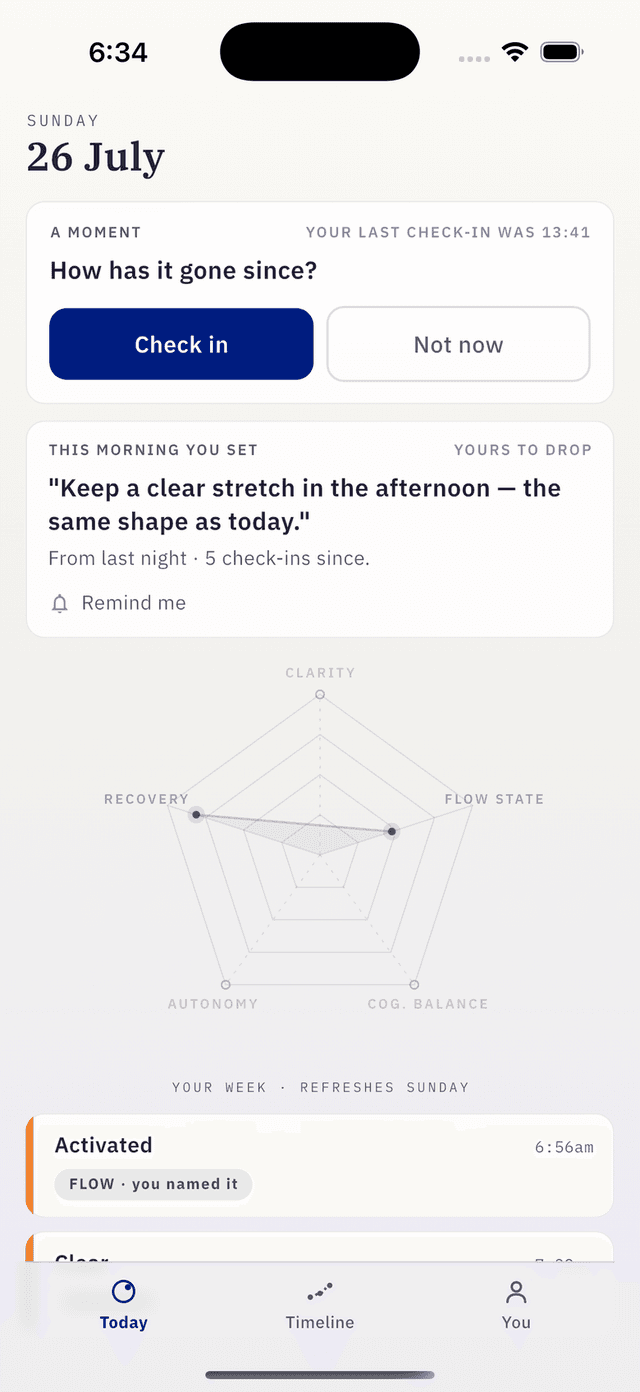
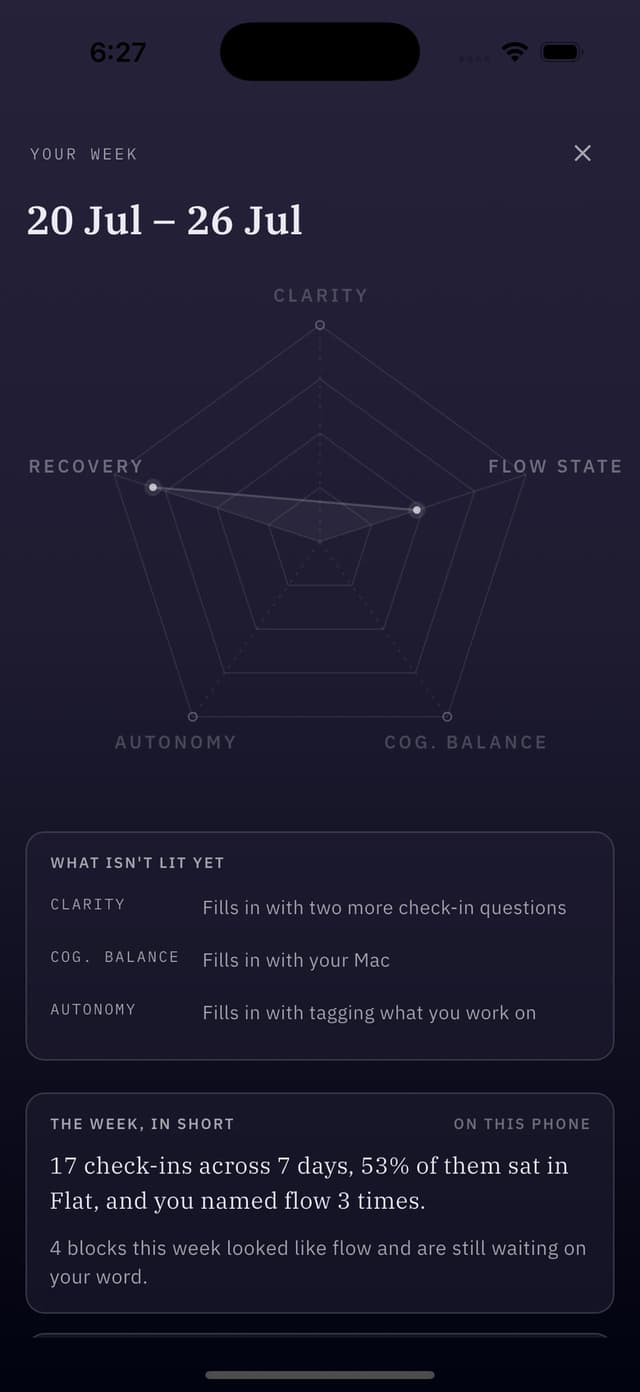
Role-aware insights identify emerging patterns like supervisory load, verification burden, flow fragmentation, and decision fatigue.
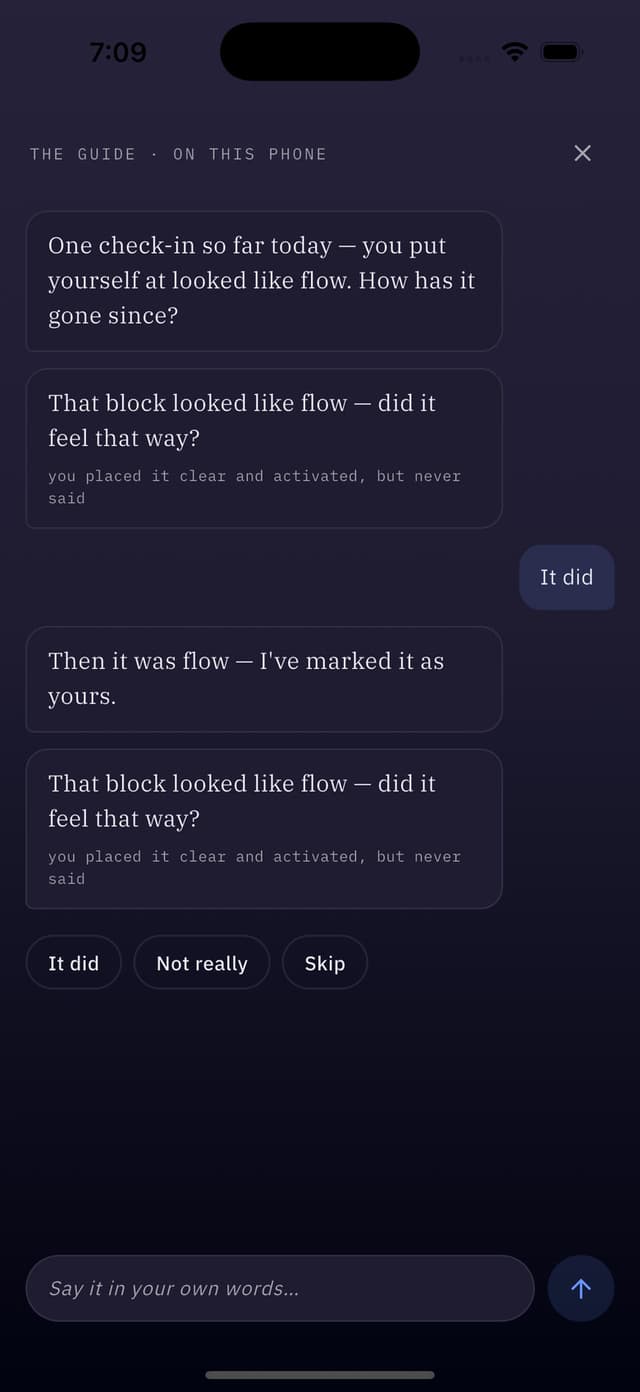
People can unpack context through guided conversation and route to self-guided, managerial, or clinician-informed support when needed.
Capabilities
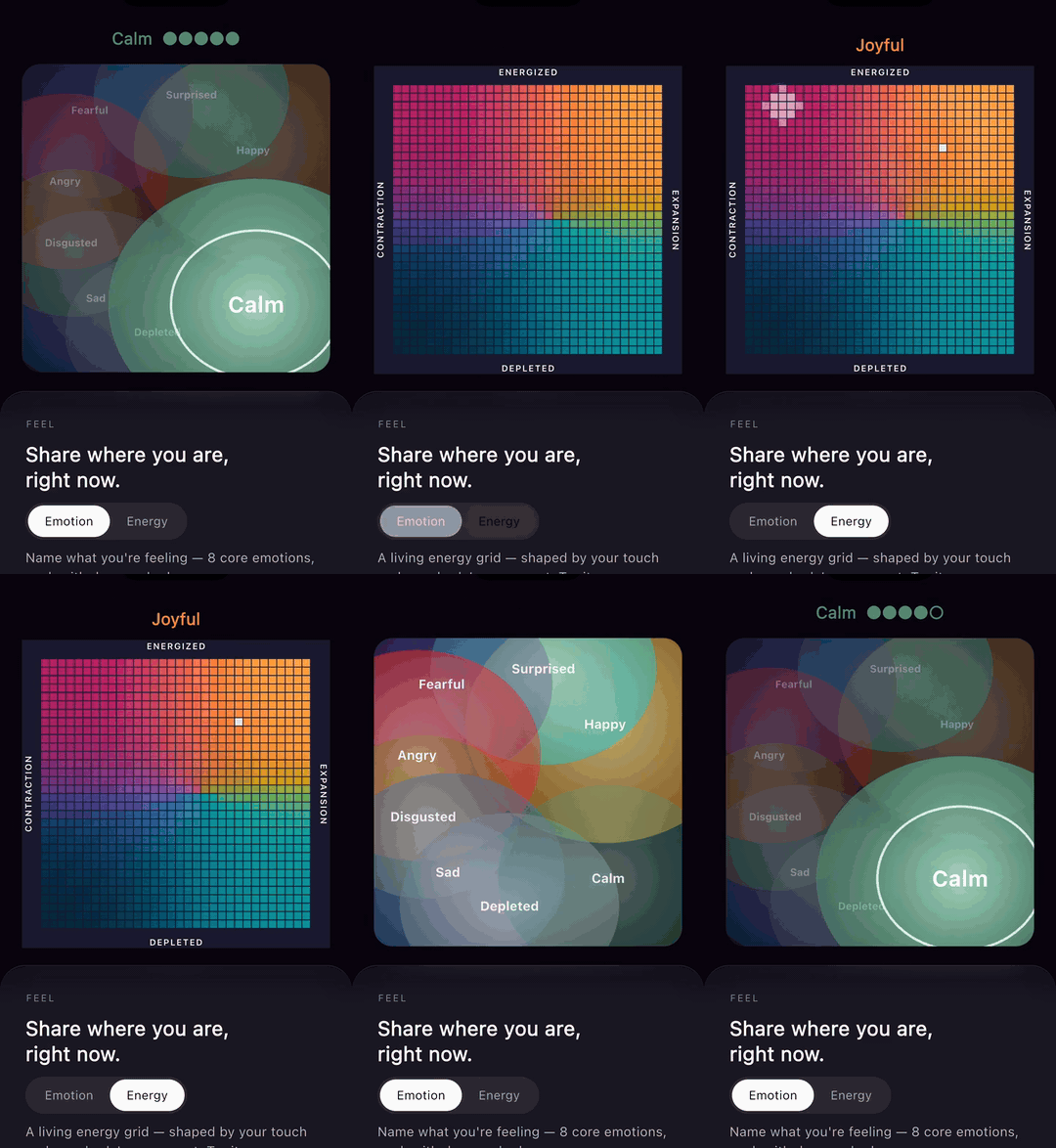
Short check-ins capture readiness, energy, workload pressure, and cognitive strain in context. An engineer, lawyer, nurse, and founder should not get the same check-in.
For every stakeholder
Understand your own load, flow, and decision readiness before you hit the wall.
Explore AI Engineering Teams ->Detect hidden review burden, trust volatility, and flow fragmentation before they impact quality or retention.
View team use cases ->Move from reactive support utilisation to continuous, de-identified psychosocial risk visibility.
See risk model ->Protect the human capacity behind AI transformation with measurable, defensible intervention pathways.
Book a pilot ->Privacy and trust
Compare reactive support spend with a continuous model that tracks readiness and reduces avoidable escalation.
Output metrics are incomplete
Financial impact rises when hidden cognitive strain is missed until quality, retention, or claims risk appears.
Early support reduces escalation
Continuous check-ins and guidance lower the share of cases needing intensive intervention.
Better economics, stronger governance
Model cost and leave impact together to support a defensible AI adoption wellbeing pilot.
Used to apply an indicative sector benchmark in your result.
Typical AU range: $30–$200/employee/year
Total sessions your workforce used last year
Typically 3–6 sessions per person per year
Indicative estimate only. Results rely on your inputs, benchmark assumptions, and simplified modelling and may contain inaccuracies or omissions. They are not legal, financial, actuarial, insurance, or medical advice. Any guarantee applies only under a signed agreement and applicable terms. Terms & disclaimer · legal@ascenda.one
Pilot launch
Measure cognitive load, readiness, and hidden supervisory burden across AI-impacted teams without turning support into surveillance.